- 100% Satisfaction Guarantee
- 0% Financing Available
- 24 HR Emergency Service
- 5-Star rating
Fireplace dead just as the nights turn cold? We handle gas fireplace repair in Monroe for natural gas homes in town and propane homes out on acreage, often the same day. You’ll know what failed and what it costs before we start.
Past the gas mains, plenty of homes around Monroe run on propane. We work on both fuels and handle furnace repair in Monroe too, so one call covers the house.
We fix what's fixable. If a part is no longer made or a repair doesn't add up, you'll hear that straight, before you spend a dime.
You hear what failed and what the fix costs, in plain numbers, before a single tool comes out. No surprises on the invoice.
Thermocouples, igniters and pilot parts come with us, so a repair out by High Rock or Chain Lake can usually wrap up on the first trip.
A real person picks up at any hour, and same-day visits are often open for homes in town and on the farms around it.


 Trustindex verifies that the original source of the review is Google.
 Trustindex verifies that the original source of the review is Google.
 Trustindex verifies that the original source of the review is Google.
 Trustindex verifies that the original source of the review is Google.
 Trustindex verifies that the original source of the review is Google.
 Trustindex verifies that the original source of the review is Google.
 Trustindex verifies that the original source of the review is Google.
 Trustindex verifies that the original source of the review is Google.
Homes here run the range: pre-war houses near downtown, 1990s subdivisions, newer builds north of US 2 and propane setups on acreage. Pick your fireplace type to see what usually goes wrong.
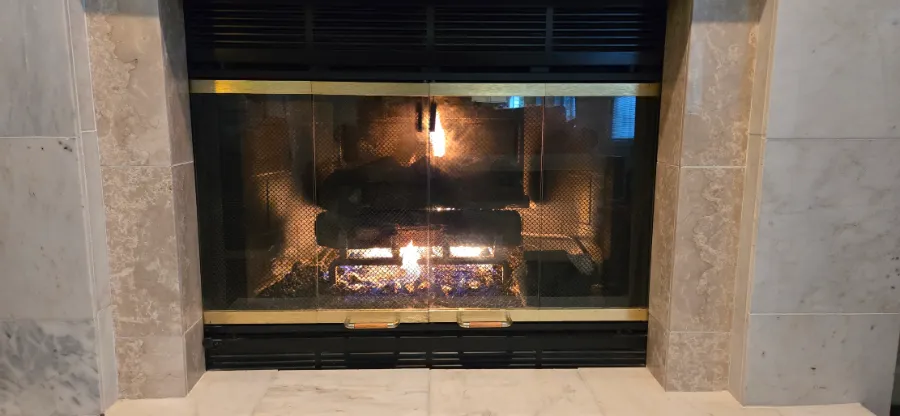
Many Monroe homes from the 1990s came with a factory-built gas fireplace, and older houses near Main Street may hold an insert in the original brick opening. Both depend on the same aging parts: thermopiles, pilot assemblies, gas valves and blowers.
Burner quits partway through the evening
Thermopile output sagging with age
Blower bearings growling or seized
Original gas valve sticking or failing
Two usual suspects. A tired thermopile can read fine on pilot alone, then sag below spec once the burner runs. Or a high-limit switch is tripping because the blower quit moving heat. We meter both while it runs.
Often, yes. Thermopiles, pilot assemblies and widely used valves like the SIT 820 have direct replacements for many older models. We read the rating plate and model number first, then order exact-fit parts when the truck doesn’t have them.
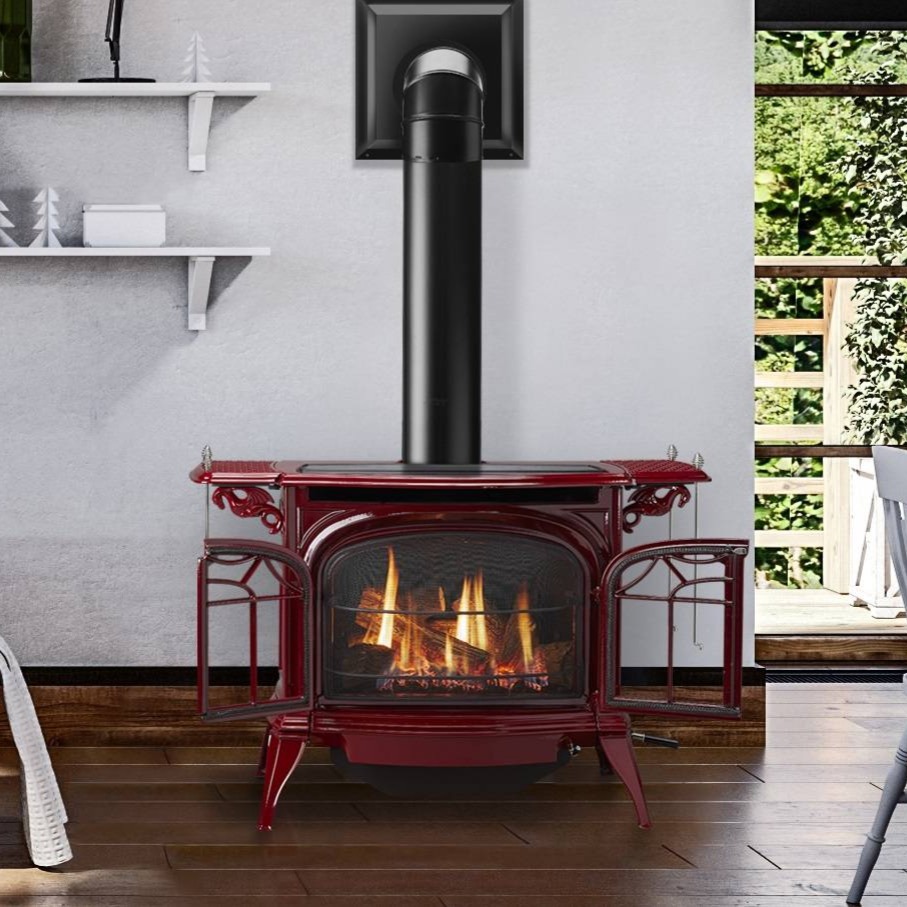
On acreage around town, a freestanding stove might heat the family room, a daylight basement or a shop, often on propane. Many run on a standing pilot, so they keep making heat when PUD lines come down, as they did in the January 2021 windstorm, though the fan goes quiet.
Heat output dropping year over year
Blower rumbling, squealing or stuck
Thermostat or wall switch not calling
Glass hazed with white residue
A dirty burner or partly plugged orifice shrinks the flame, a failing regulator can starve it of pressure, or the blower has quit pushing heat into the room. We read manifold pressure, clean the burner and test the fan.
Not always. Dust and pet hair packed into the blower wheel throw it off balance, and loose mounting screws rattle. If cleaning and tightening don’t quiet it, worn bearings are likely, and we’ll price a new blower first.
Log sets out here tend to sit in older brick fireplaces or in houses where field mice come looking for winter shelter. They need clean burner ports, the right air setting for their fuel, and every log resting where the diagram shows.
Mouse nests around the burner and valve
Sooty, yellow flames on propane
Pilot hard to reach under the grate
Embers and logs worn or out of place
Hold off on lighting it. Nesting material can block air openings and burner ports, and chewed wires can kill the igniter. We clean the compartment, check the wiring and pilot, and test the flame before it goes back in service.
Logs should burn somewhat yellow, but heavy soot points to too little air at the burner, logs off their marks, or an orifice that doesn’t match the fuel. That last one means stop using it until we check.
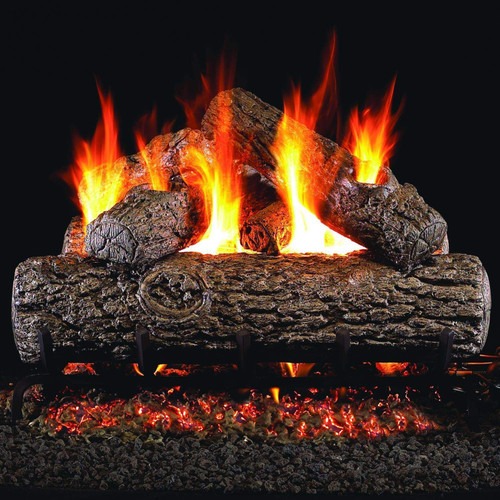
Monroe gets about 48 inches of rain and snow a year, well above Everett's roughly 33, and patio fire features feel it. Water sits in burner pans, lava rock stays soggy and igniters corrode. We dry them out, clean the burner and get the flame lighting cleanly again.
Waterlogged lava rock or fire glass
Burner dies when you let go of the knob
Corroded igniter or spark wire
Rusted burner ring or pan
Many fire pit igniters run on an AA or AAA battery, and wet weather corrodes the contacts. Swap the battery and dry the terminals. If it clicks but won’t spark at the burner, the electrode or its wire needs replacing.
Many fire pits have a thermocouple safety valve, so you hold the knob in while the sensor heats, up to a minute. If it still quits after a full minute, the thermocouple is weak or the flame isn’t reaching it.
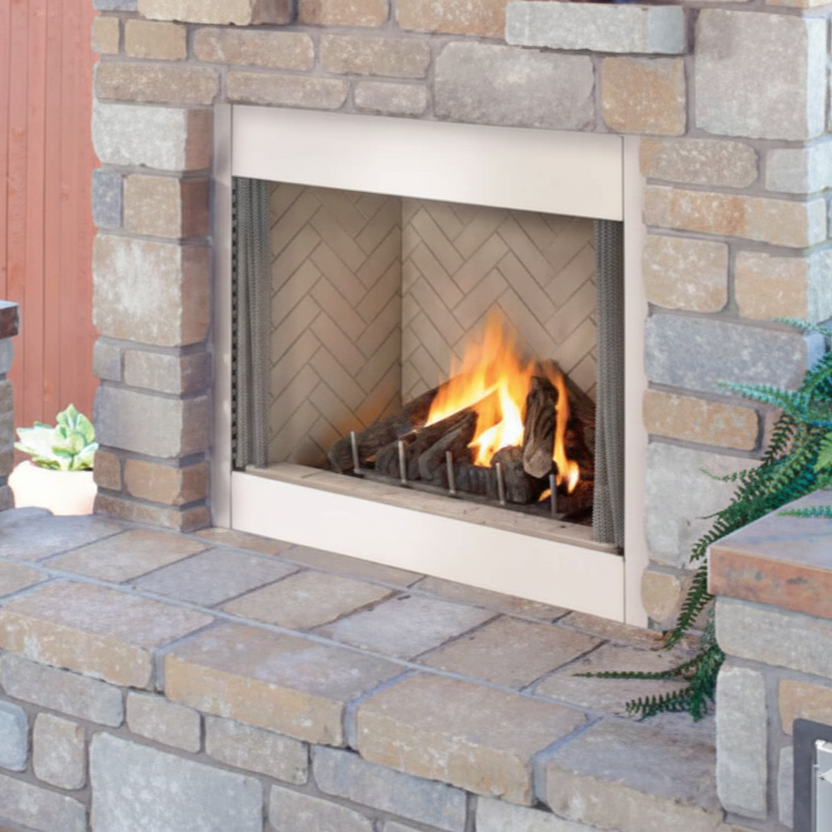
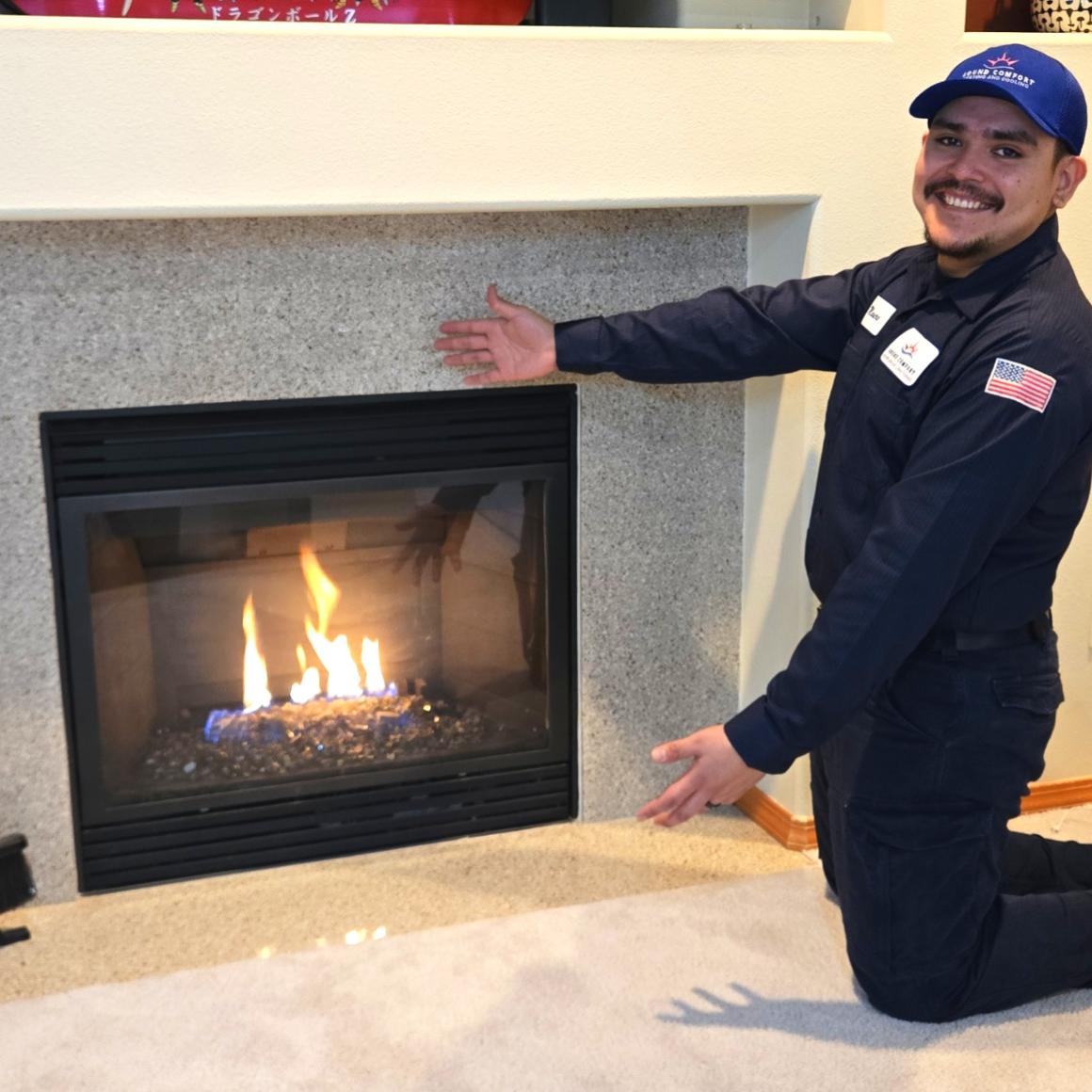
Call (425) 225-4756 or book online. Tell us your fuel, natural gas or propane, and what the fireplace is doing.
A licensed, insured tech finds what failed, explains it at the hearth and quotes the repair. Work starts only after you agree.
We make the repair, run the fireplace through a full cycle with you, and confirm a clean, steady flame.
Most fireplaces give hints before they quit for good. On a rural property, where the stove may be your main heat on a stormy night, it pays to act on these early.
Pilot needs relighting more than once a season
Burner catches late or with a soft boom
Soot building on the glass or logs
Water has touched the valve or controls
Smell gas? Don’t light anything or touch switches. Get out first. From outside, use a cell phone to reach 911 or Puget Sound Energy (1-888-225-5773). On propane, call your supplier too. Once it’s declared safe, ring us at (425) 225-4756.
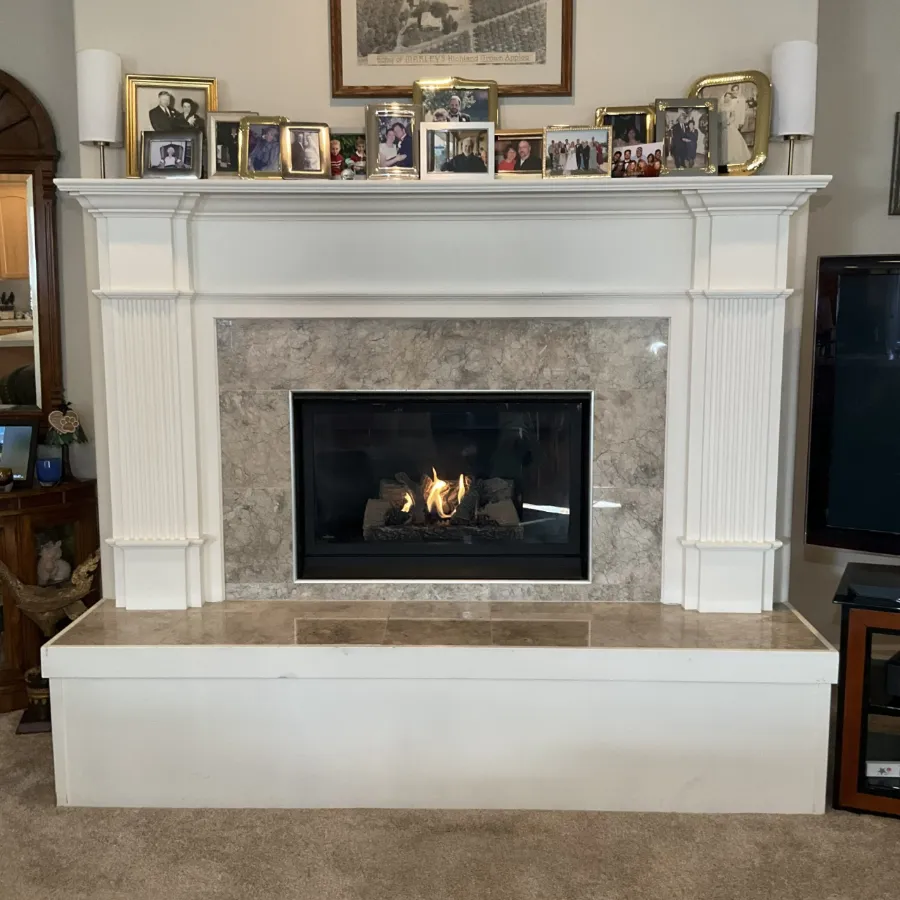
Damp winters, field mice and busy households take a toll on a fireplace. A few minutes each fall keeps yours firing on the first try between service visits.
Find the quarter-turn valve, usually behind the lower grille, before you ever need it. When the handle runs parallel to the pipe, gas is on; turned across it, gas is off.
With the unit cool, look for chips, cracks or a gasket that's flattened or frayed along the glass edge. A sealed fireplace should never run with damaged glass.
Keep furniture, drying laundry and holiday garland back from the glass and mantel. Your manual lists exact clearances, and they matter more than the decor.
Each fall, step outside and eyeball the vent cap. Wasp nests, leaves and blackberry vines like to crowd it, and a choked cap may starve the flame or push exhaust back indoors.
Carbon monoxide gives no warning you can see or smell. In a closed-up daylight basement with a propane stove, a failed seal or a blocked vent can let it build quietly. Mount CO alarms on each floor and by the bedrooms. If one goes off, get everybody outside and dial 911.
Schedule it for the weeks after the Evergreen State Fair. We clean the burner and pilot, test the thermopile or flame sensor, check the vent and leak-test every fitting.
Want a single tune-up instead of a plan? Call us or book online anytime.
Yes. Plenty of acreage homes in the area sit past the gas mains and run on a tank. Propane units use different orifices and run about 10 inches of water column at the manifold versus 3.5 for natural gas, so we test against your rating plate.
Not yet. Heat & Glo says a unit exposed to water shouldn’t run until a professional checks it, and gas valves and controls that were underwater often need replacing. Leave it off and call us once the water is gone and the power is safe.
A standing pilot goes out whenever gas stops, and air can creep into the line. Relight it by the steps on the unit’s label. If it won’t catch, or catches and drops twice, quit trying; our won’t-light troubleshooting page explains what we check next.
All of it, from Downtown and Fryelands to North Hill, Woods Creek, Lake Tye and Chain Lake, plus the farm roads around town. We come down SR 9 and out US 2 from our Lake Stevens shop.
Check the rating plate, usually on a chain or tag behind the lower grille. It names the fuel the unit is built for. A conversion kit adds its own label. Never run a fireplace on a fuel its plate doesn’t list.
Repairs come with a year of parts and labor protection and our 100% Satisfaction Guarantee. With S.M.A.R.T. coverage, that doubles to 2 years. If the same part acts up inside that window, call and we make it right.