- 100% Satisfaction Guarantee
- 0% Financing Available
- 24 HR Emergency Service
- 5-Star rating
Insert pilot keeps dying in your 1960s rambler? Our fireplace repair in Mountlake Terrace covers inserts, stoves, log sets and patio fire tables, frequently on the day you call. You approve a clear price first, and (425) 225-4756 rings through to a live person day or night.






We’re among the few HVAC shops around here that also work on gas fireplaces, so the tech who knows furnaces along 56th Avenue W knows your insert too.
We read pilot millivolts and gas pressure against the rating plate, so the part we replace is the part that actually failed.
Many original Terrace homes are compact, so the fireplace sits near kitchens, fans and bedrooms. We check how it drafts and vents in that space.
More than 200 Google reviews, all adding up to a perfect 5.0. The family behind our Lake Stevens shop earned that one repair at a time.
The full repair price is on the table before work begins, and nothing gets added without your OK. That's how it works on every Terrace call.
EXCELLENT Based on 210 reviews
 Posted on Google
 John OwensService was awesome. Fast and efficient and Mauro was a delight to work with. I would recommend them to everyone!Posted on Google
 Mike SloyFantastic service. My fireplace is now in perfect condition. I can’t say enough about this company, and Mario.Posted on Google
 Melissa GravesGreat job! Very nice.Posted on Google
 Judy SloanHannah was awesome to schedule with! Great service all around!Posted on Google
 James AndrewsOur technician, Mauro was fantastic. Pricing up front, great communication, and my fireplace is as good as new. Thank you Sound Comfort, and great job Mauro.Posted on Google
 Sarah EnaMauro was incredible. Super personable, explained things in a clear way, and did great work on our old furnace. Would highly recommend!Posted on Google
 J. WhiteExceptional work! The service was great and our fireplace is as good as new. Thank you Mauro!Posted on Google
 Matt SmytheFantastic service. Service was quick and they kept me informed on what they were doing. Mauro was friendly and didn’t try to upsell any services that weren’t requiredVerified by TrustindexTrustindex verified that these reviews were published on Sound Comfort Heating and Air Conditioning's Google Business Profile. Learn more
Many brick fireplaces from the 1950s and 1960s now hold inserts or log sets, plenty of 1980s North Terrace homes came with factory-built units, and patios host fire tables. Find yours below.
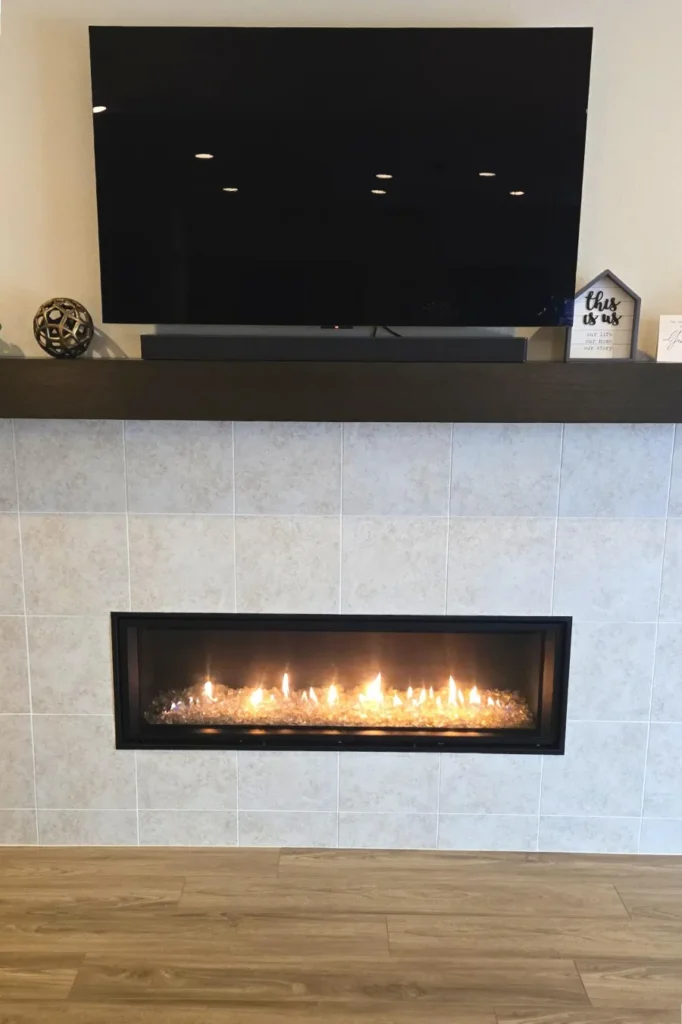
An insert slides into an old brick fireplace and vents through liners run up the chimney. In a mid-century Terrace rambler it often does real heating work, so small faults show up fast: a pilot that drifts out, a sticky valve knob, a fan that hums.
Pilot drifting out every few days
Valve knob stuck between settings
Liner connections loose at the insert
Blower humming without moving air
Usually the pilot flame has pulled back from the thermocouple because of a dusty pilot hood or orifice, or the thermocouple reads below about 18 millivolts. A cleaning and meter test find it. Our pilot light guide goes deeper.
Don’t. Many valve knobs have to be pushed in to move between certain positions, and forcing one can damage the valve. Try pressing gently as you turn. If it still won’t move, leave it and call us.
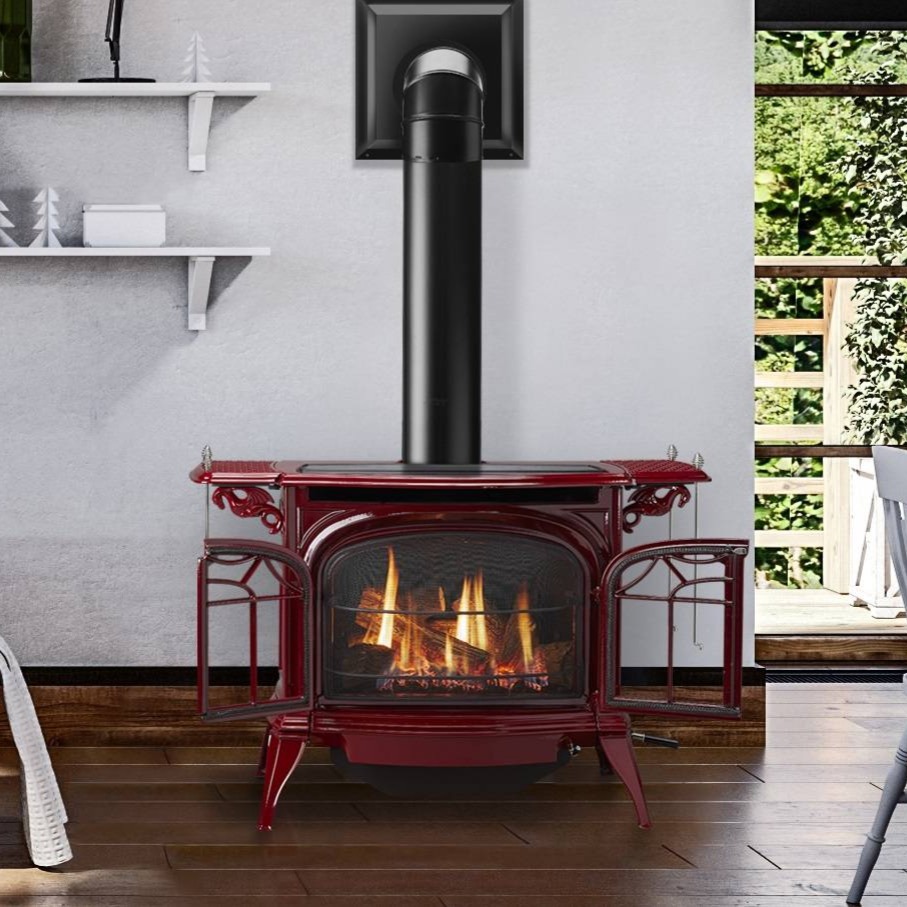
Slab-floored postwar homes here have no crawlspace or basement for ducts, so a freestanding stove may warm a family room or an addition. Older natural-draft models pull combustion air from the room, which is why a strong range hood can upset them.
Pilot snuffed when exhaust fans run
Thermostat clicks on, burner never answers
Top or rear vent pipe loose
Soot streaks above the glass frame
On a natural-draft (B-vent) stove, a strong exhaust fan can pull air backward through the vent, bending or snuffing the pilot. Sealed direct-vent stoves take outside air and are far less affected. We test draft with fans on and off.
It has to be a thermostat rated for millivolt systems. The valve runs on the small voltage its thermopile makes, and many smart thermostats expecting 24-volt power won’t work with it. We match the thermostat and check the wiring run.
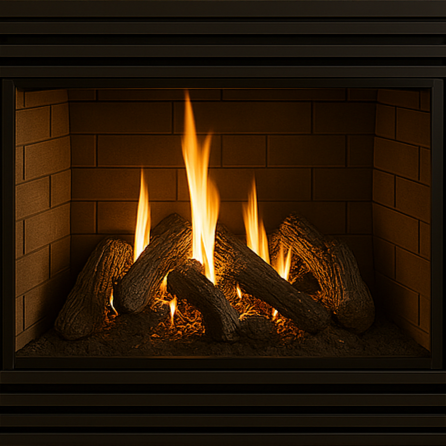
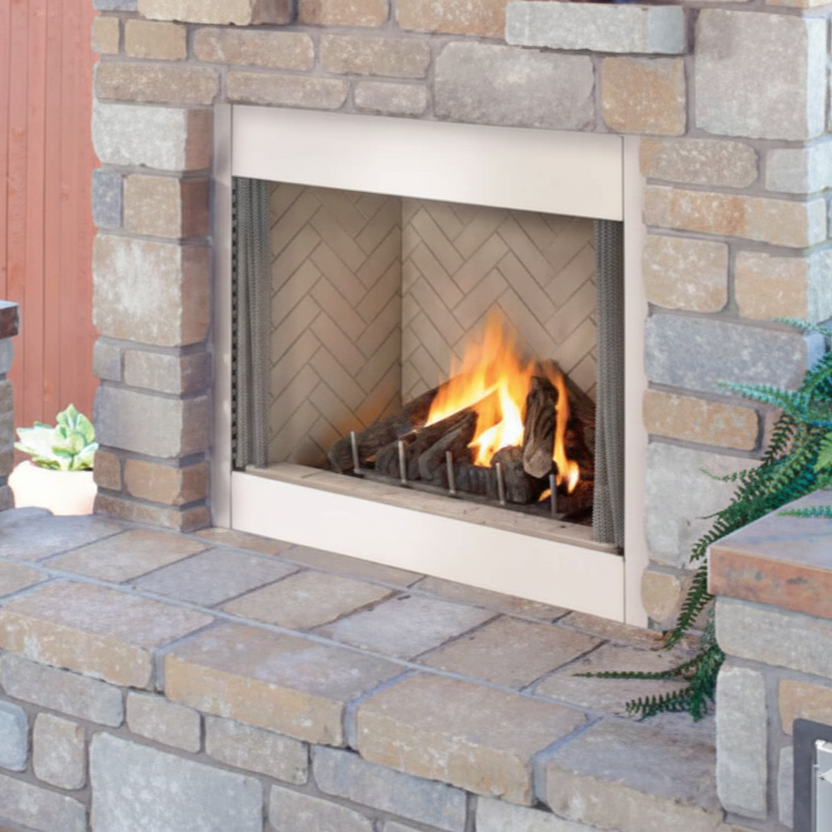
Plenty of Terrace living rooms still center on a 1950s or 1960s brick fireplace with a gas log set inside. The logs are fragile ceramic, matched to their burner, and the set only looks and burns right when each piece sits where the maker intended.
Cracked or crumbling ceramic logs
Hissing that doesn't sound right
Ember bed thinned out or gone dull
Flame pattern uneven across the grate
No. Log sets are tested as a system, so a replacement should come from the same maker and model. A mismatched log can block flame paths and cause soot. We source the matching piece and place it by the diagram.
A soft rush of gas while it burns is normal. Hissing with the logs off, or near the gas pipe, can mean a leak: leave the house, call 911 or PSE from outside, then us once it’s safe.
Terrace yards and townhome patios are snug, so a fire table often sits close to siding, railings or a covered porch. From Lake Ballinger to Melody Hill, convergence-zone snow and soggy leaves also end up in the burner pan. We clean, test and check clearances.
Clearance too tight to siding or railings
Weak flame on cold nights
Snow and leaves packed in the pan
Igniter clicking with nothing catching
Whatever its manual says, and that varies by model. Most list minimum distances to walls, railings and anything overhead, and a covered patio adds limits. We measure yours against the manual during service and flag anything too tight.
Often, yes. A small propane cylinder makes less vapor as it gets cold and low, so pressure and flame drop. Keep it fuller in winter, and if a full tank still burns weak, we check the regulator and burner.
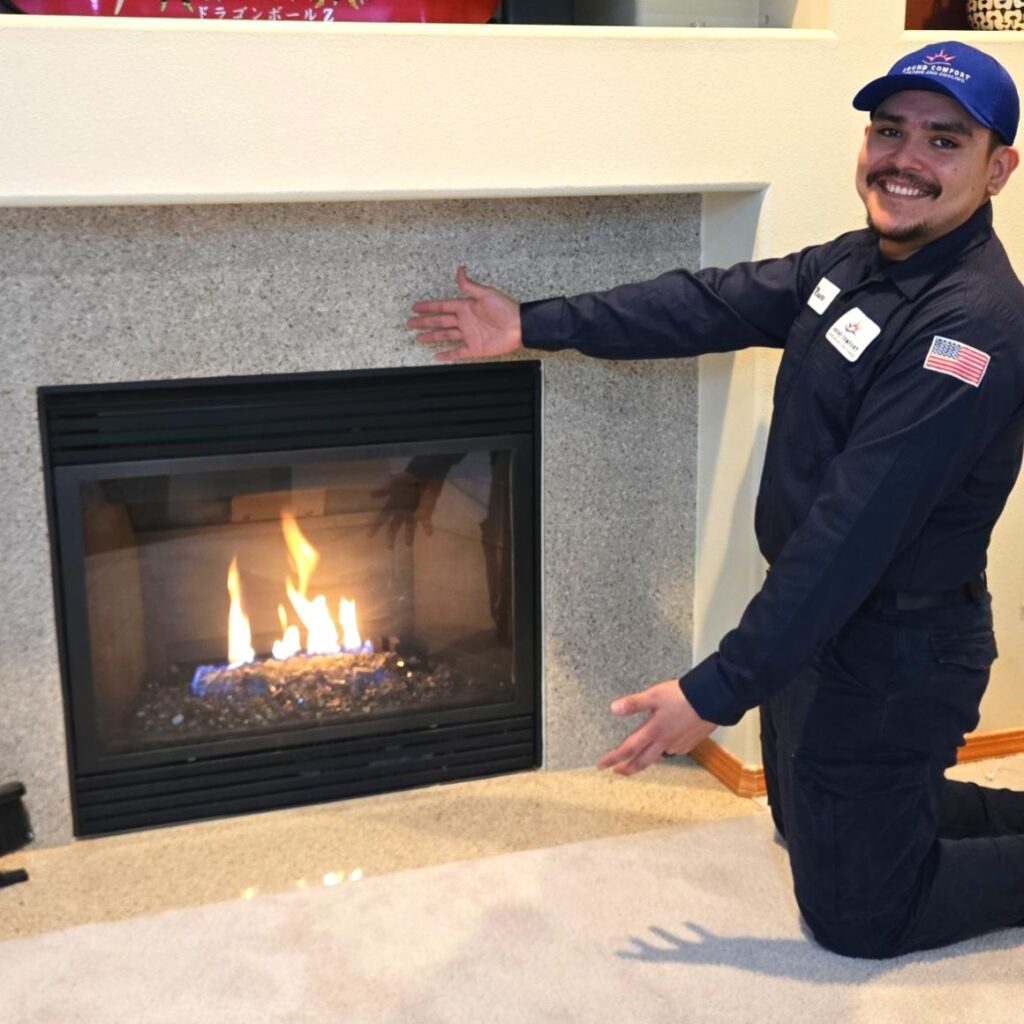
Phone or book online, any hour. From our shop, it’s a straight run down I-5 to the 220th or 236th exit.
We test before we guess, explain what failed in plain words, and give you a firm price to approve.
The repair gets done, leak-checked and test-fired, and parts and labor stay covered for twelve months.
Most of what keeps a fireplace healthy happens at its yearly S.M.A.R.T. checkup. In between, these habits help a lot.
Glowing ember material and ceramic logs crumble easily. Don't vacuum or rearrange them; a quick look for cracks is plenty, and we reset them during service.
The grilles above and below an insert move room air and keep the controls cool. Don't block them with baskets, magazines or a TV soundbar.
Swap the remote and receiver backup batteries every fall, using quality alkalines. Dead batteries are a common cause of fireplaces that won't start.
Wait until the glass is completely cool, then use a cleaner made for gas fireplace glass. A gray or white haze is residue from the fuel, and the right cleaner lifts it.
In a compact rambler, the fireplace sits only steps from the bedrooms, so carbon monoxide has little room to dilute. A loose liner, a cracked panel or a blocked cap can let it in without any smell. Fit a CO alarm by each sleeping area and another on every level. If one sounds, take everyone outdoors and phone 911.
In a Terrace home where the insert carries the living room, a small fault becomes a cold evening fast. Watch for these, and call before the next convergence-zone snow catches you with a dead pilot.
Smell gas indoors? Walk out now and skip the light switches. Once outside, dial 911 or reach PSE on 1-888-225-5773. After they clear the home, our line is (425) 225-4756.
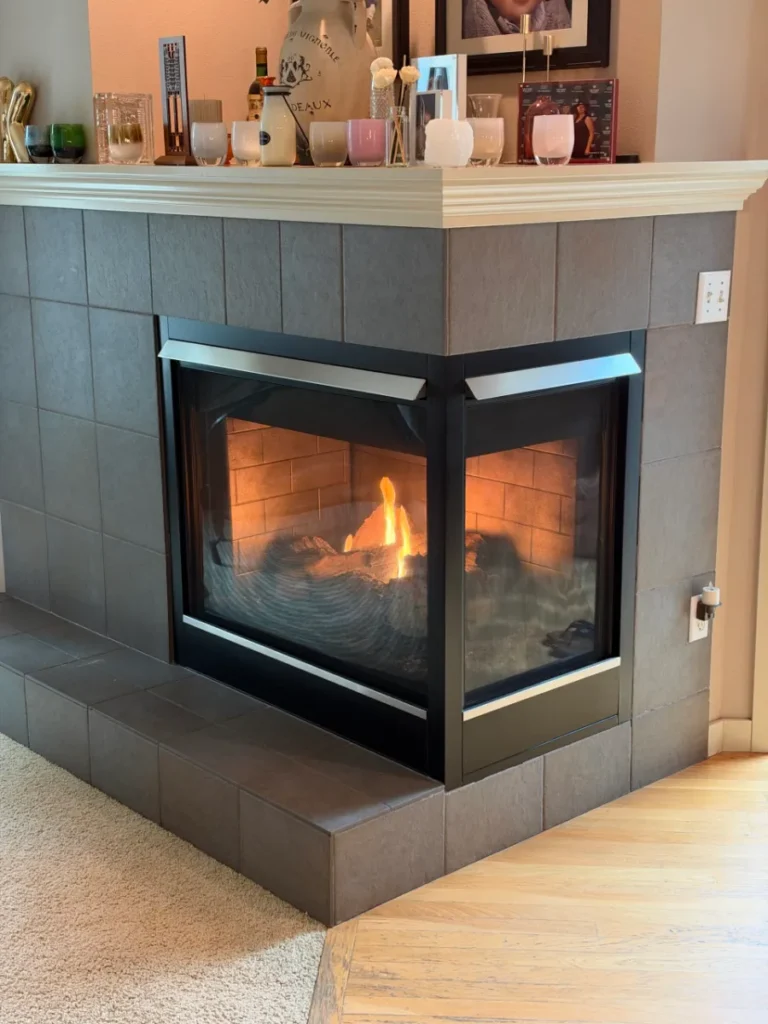
Mountlake Terrace sits under the convergence zone, so we time your yearly visit for early fall: pilot and burner cleaned, venting checked, every fitting leak-tested.
Rather skip the plan? One fireplace tune-up can be booked whenever it suits you.
It can be. A buried direct-vent cap can smother the burner or spill exhaust where it shouldn’t go. With the fireplace off, gently brush snow clear of the cap, and keep shrubs trimmed back from it. Convergence-zone storms here can pile it up fast.
That’s the safety interlock. Napoleon, for one, notes the valve won’t relight until the thermocouple cools, about 60 seconds. Most lighting labels also call for setting the knob to OFF and letting five minutes pass so leftover gas clears.
Every one: Town Center, Gateway, Lake Ballinger, Melody Hill, Cascade View, Cedar Terrace, North Terrace and East Terrace, from the streets around Terrace Creek Park to the homes near the Nile Shrine course on the south edge.
Many remotes have a lock. On Proflame 2 remotes, used by Regency and others, press Mode and the up arrow together until a lock icon appears; repeat to unlock. Other brands differ, so check the manual or ask us at your visit.
Dust on the burner and firebox cooks off the first time, and a nearby smoke alarm can react. Open a window and let it burn off. If the smell keeps coming back, have it checked. A CO alarm is different: everyone out, then call 911.
Both turn pilot heat into electricity. A thermocouple makes a small signal, around 18 millivolts or more, that only holds the pilot valve open. A thermopile stacks junctions to make hundreds of millivolts, enough to run the whole valve without house power.