- 100% Satisfaction Guarantee
- 0% Financing Available
- 24 HR Emergency Service
- 5-Star rating
Gas fireplace won’t light on a cold Snohomish County night? Run the quick checks below first. Still nothing? Call (425) 225-4756. A real person answers 24/7, same-day visits from our Lake Stevens shop are usually open, and the price is yours to approve before any work.





A no-start fireplace is usually one small failed part hiding among good ones. We test in order, switch to valve, on homes from Arlington down to Bothell.
Burners, valves, pilots and venting are what we work on all winter long, on furnaces and fireplaces alike, so testing goes quickly.
After testing, you get a plain explanation and one price. Nothing gets replaced until you say yes, whether it's noon or midnight.
We work on Regency, Napoleon, Majestic, Heat & Glo and Montigo, plus most other gas inserts, stoves and log sets sold around here.
Once it lights, we leak-test the fittings we touched with detection solution, watch a full burn cycle and confirm the flame looks right.
EXCELLENT Based on 210 reviews
 Posted on Google
 John OwensService was awesome. Fast and efficient and Mauro was a delight to work with. I would recommend them to everyone!Posted on Google
 Mike SloyFantastic service. My fireplace is now in perfect condition. I can’t say enough about this company, and Mario.Posted on Google
 Melissa GravesGreat job! Very nice.Posted on Google
 Judy SloanHannah was awesome to schedule with! Great service all around!Posted on Google
 James AndrewsOur technician, Mauro was fantastic. Pricing up front, great communication, and my fireplace is as good as new. Thank you Sound Comfort, and great job Mauro.Posted on Google
 Sarah EnaMauro was incredible. Super personable, explained things in a clear way, and did great work on our old furnace. Would highly recommend!Posted on Google
 J. WhiteExceptional work! The service was great and our fireplace is as good as new. Thank you Mauro!Posted on Google
 Matt SmytheFantastic service. Service was quick and they kept me informed on what they were doing. Mauro was friendly and didn’t try to upsell any services that weren’t requiredVerified by TrustindexTrustindex verified that these reviews were published on Sound Comfort Heating and Air Conditioning's Google Business Profile. Learn more
In our experience, no-start trouble across Snohomish County falls into four groups. Try the safe checks in each, and stop at anything that needs tools or opening up gas parts.
Every fire starts with a signal. A wall switch, remote or thermostat calls for heat, and on electronic units a receiver needs house power or backup batteries to act on it. Safe checks: flip the wall switch, put fresh batteries in the remote, and confirm the breaker feeding the receiver hasn't tripped.
Remote batteries dead or nearly gone
Remote and receiver no longer paired
Tripped breaker or unplugged receiver
Failed wall switch or long switch wire
A lit screen only proves the remote has batteries. The receiver may have lost power, lost its pairing, or be waiting on dead backup cells. Check its breaker and outlet first, then follow your manual’s re-pairing steps.
Electronic ignition can’t spark without house power or its backup batteries. Many receivers take four AA cells and original IntelliFire boxes take two D-cells, so load a fresh set. Standing pilot units make their own power and should still light.
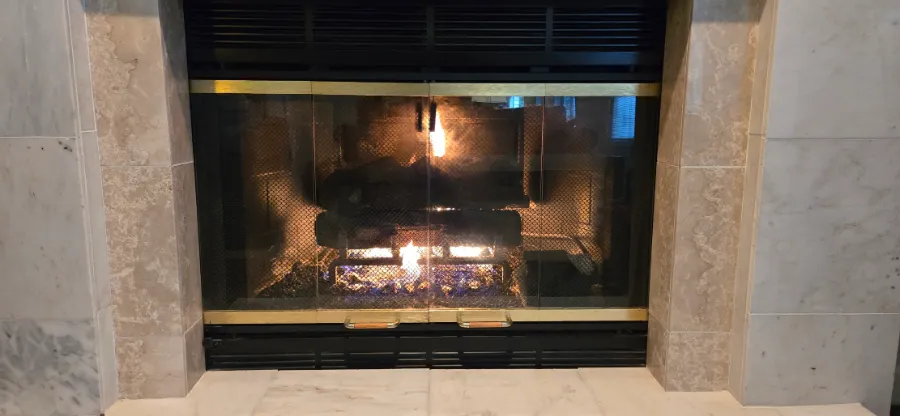
If the switch is calling and nothing lights, look at the pilot. A standing pilot may have gone out after a summer shutoff or a gas interruption. Electronic units should click and spark; clicking with no flame points to a weak spark, a fouled pilot or no gas reaching it.
Standing pilot out since last spring
Clicking with no flame
Cracked electrode or broken igniter wire
Lockout after repeated ignition tries
Find the lighting label, typically on a plate near the controls under the bottom grille. Turn the knob to OFF and wait five minutes to clear gas, then follow each step exactly. Smell gas at any point? Stop and leave.
Electronic systems spark for a set time (up to about a minute on some), then stop. That’s a safety lockout. Switch it off, wait a few minutes, try once more. A second lockout means a part needs testing.
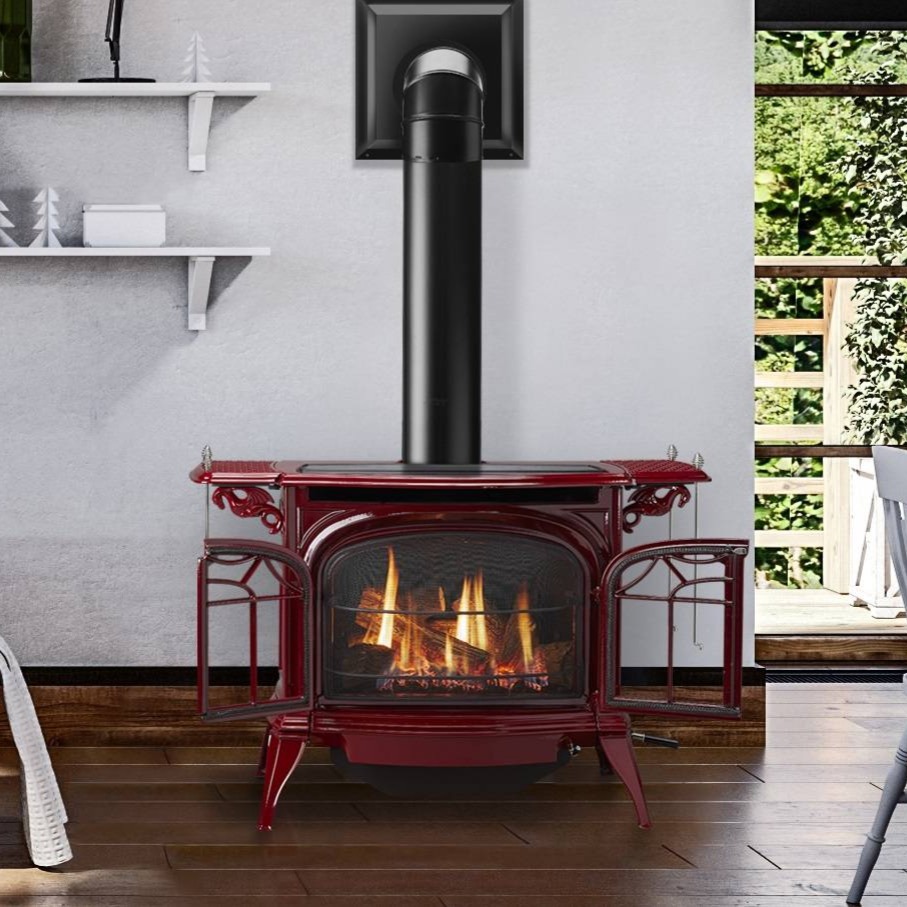
No gas, no fire. Make sure another gas appliance works, like the range or water heater, or read the propane tank gauge. On millivolt units, also confirm the valve knob sits on ON, not PILOT or OFF, since a bumped knob is an easy miss.
Valve knob left on PILOT or OFF
Closed shutoff behind the lower louver
Empty propane tank on rural acreage
Air in the line after a gas outage
Yes. Gas can reach the house and still stop short of the burner. A closed fireplace shutoff, low pressure at the unit, a plugged orifice or a failed valve look identical from the couch, so we measure with a manometer.
Usually behind the lower louver or access panel, on the pipe feeding the control valve. A quarter-turn handle is open when it lines up with the pipe. If it’s stiff, corroded or missing, leave it alone and call us.
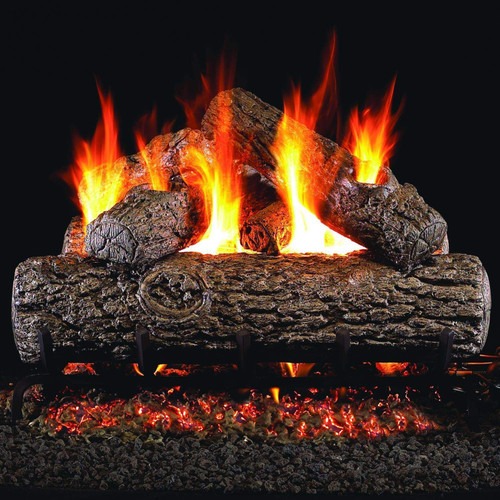
Some fireplaces light for a moment and quit, or show a pilot that never hands off to the main burner. That's the safety system shutting the gas off: a dirty flame sensor, a weak thermopile, a loose ground or a tripped high limit switch. These need a meter, not guesswork.
Dirty flame sensor on electronic ignition
Pilot lit, main burner stays dark
Loose ground or wiring at the module
High limit switch tripping on heat
On electronic ignition, the module has to prove the pilot flame through a sensor rod. Carbon on that rod breaks the signal, so the gas shuts off for safety. A careful cleaning often fixes it; a cracked sensor gets replaced.
Please don’t. Limit switches, flame sensors and thermopiles exist to stop gas when something is wrong, and bypassing one can let unburned gas or exhaust into the room. Call instead; a real person picks up around the clock.
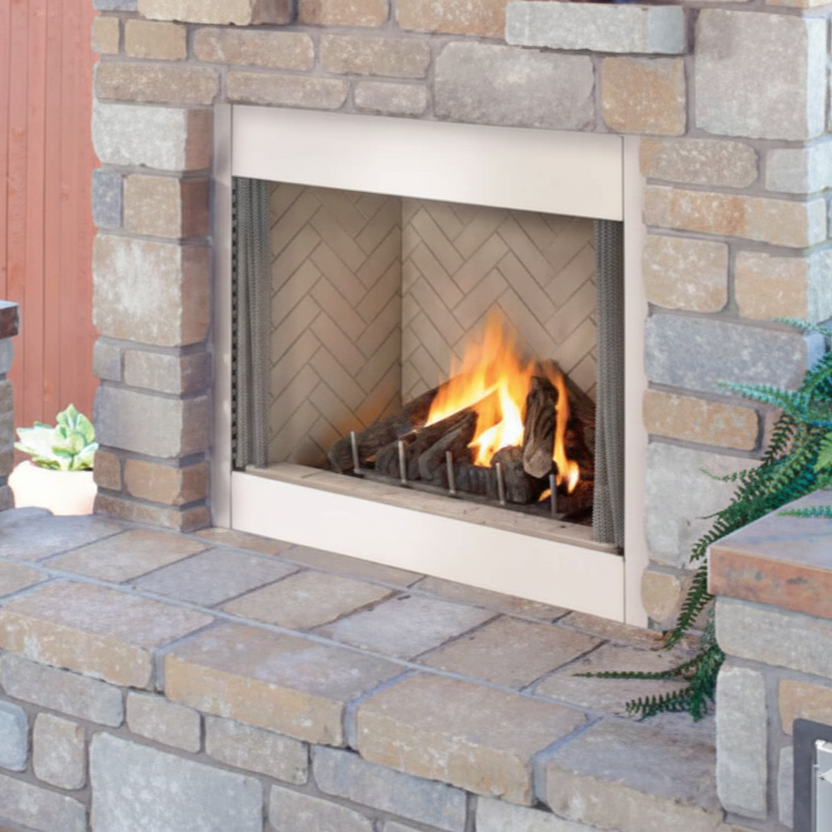

Call or book online and tell us what happens: silence, clicking, or a quick flame that quits. That shapes what we bring.
We test from switch to valve, point out the part that failed and quote one upfront price for you to approve.
We repair it, leak-check our work, run a full cycle and back the repair with our 1-year parts and labor warranty.
Most of what stops a fireplace from lighting builds up quietly between seasons. These habits catch it early, before the first chilly week of a Snohomish County fall.
Light the fireplace on a mild late-summer evening and let it run a while. A no-start then means an easy appointment instead of a cold-snap scramble.
Swap the remote batteries each autumn and keep a fresh set of receiver backup batteries where you can find them in the dark during the next windstorm outage.
Keep the manual and model number where you can find them. When the fireplace won't light at 9 p.m., the right steps, and the details we'll ask for, are right there.
A technician cleans the pilot and burner, inspects the gasket and venting, and leak-tests the gas connections, catching a fading part before it leaves you cold in January.
When a storm knocks the power out and the fireplace becomes your heat, carbon monoxide risk goes up. Keep generators outdoors, at least 20 feet from doors, windows and vents, as the CDC advises, and never heat with a gas oven. Keep a battery-powered CO alarm on every floor; if one sounds, get everyone out and call 911.
Homeowner checks have a limit, and gas controls sit past it. If power, batteries and gas supply all check out and any of these is still true, it’s a technician job. Call (425) 225-4756; we cover Mukilteo to Granite Falls.
Smell gas? Stop troubleshooting. Leave the house without flipping switches and phone 911 or Puget Sound Energy (1-888-225-5773) once outside. Stanwood and north Arlington homes are on Cascade Natural Gas instead. When it’s declared safe, call us.
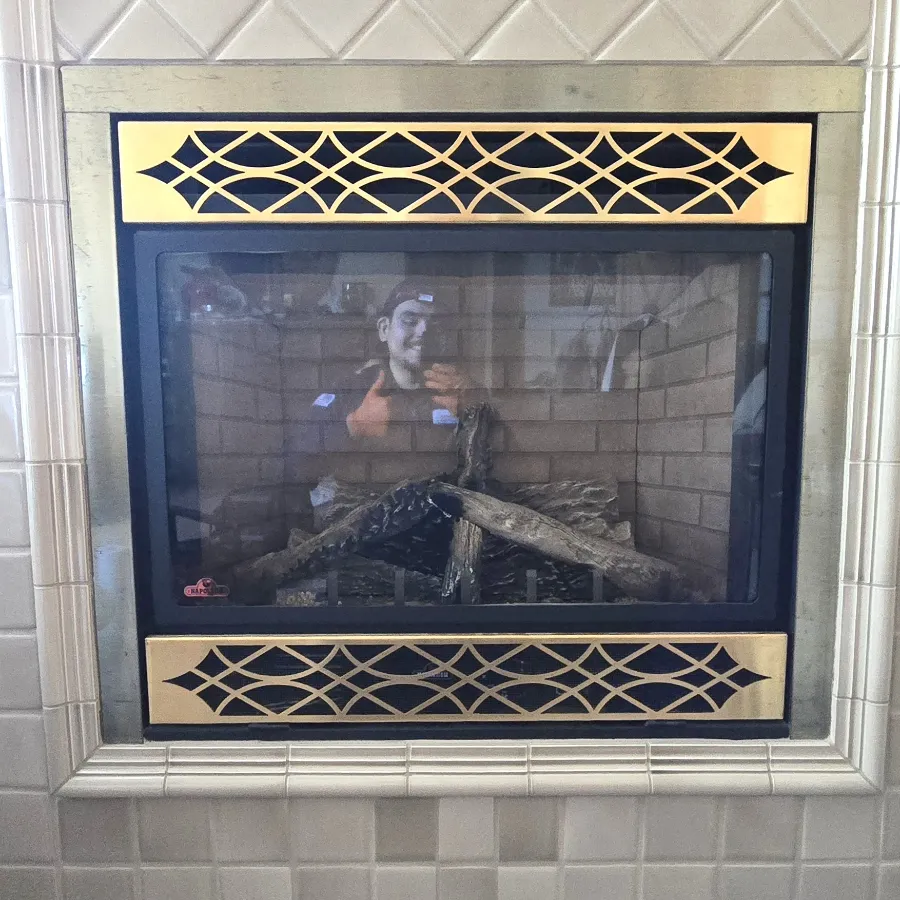
Each yearly visit cleans the pilot, tests ignition and safety controls and checks for gas leaks, so the first fire of fall starts on cue from Edmonds to Arlington.
Want a single fireplace tune-up without a plan? Call or book online and we'll fit you in.
Often, yes. Same-day visits are usually available across our service area, from Stanwood down to Shoreline. Call (425) 225-4756 any hour; a real person answers and gives you an honest arrival window.
A try or two by the instructions is fine. Cycling the valve over and over is not, because gas can collect in the firebox. If it won’t light after two attempts, step away and call.
Often a cleaning plus one part: a thermopile, igniter, flame sensor, switch or receiver. Common parts travel with us; brand-specific boards sometimes need ordering, and we’ll say so before you approve anything.
Yes. Once testing is done, you hear what failed and get one upfront price, and the decision is yours. Wisetack offers 0% interest over 12 months to qualified buyers, and Klarna is another way to spread out a bigger repair.
Yes, and that’s a different set of causes, mostly in the pilot circuit. Our page on a pilot light that keeps going out walks through them, from thermocouples to drafty vent caps.
Idle months let dust and spiders foul the pilot, remote batteries quietly die, and some owners shut the gas or pilot off for summer and forget. The batteries and settings are yours to check. A fouled pilot needs a professional cleaning.